

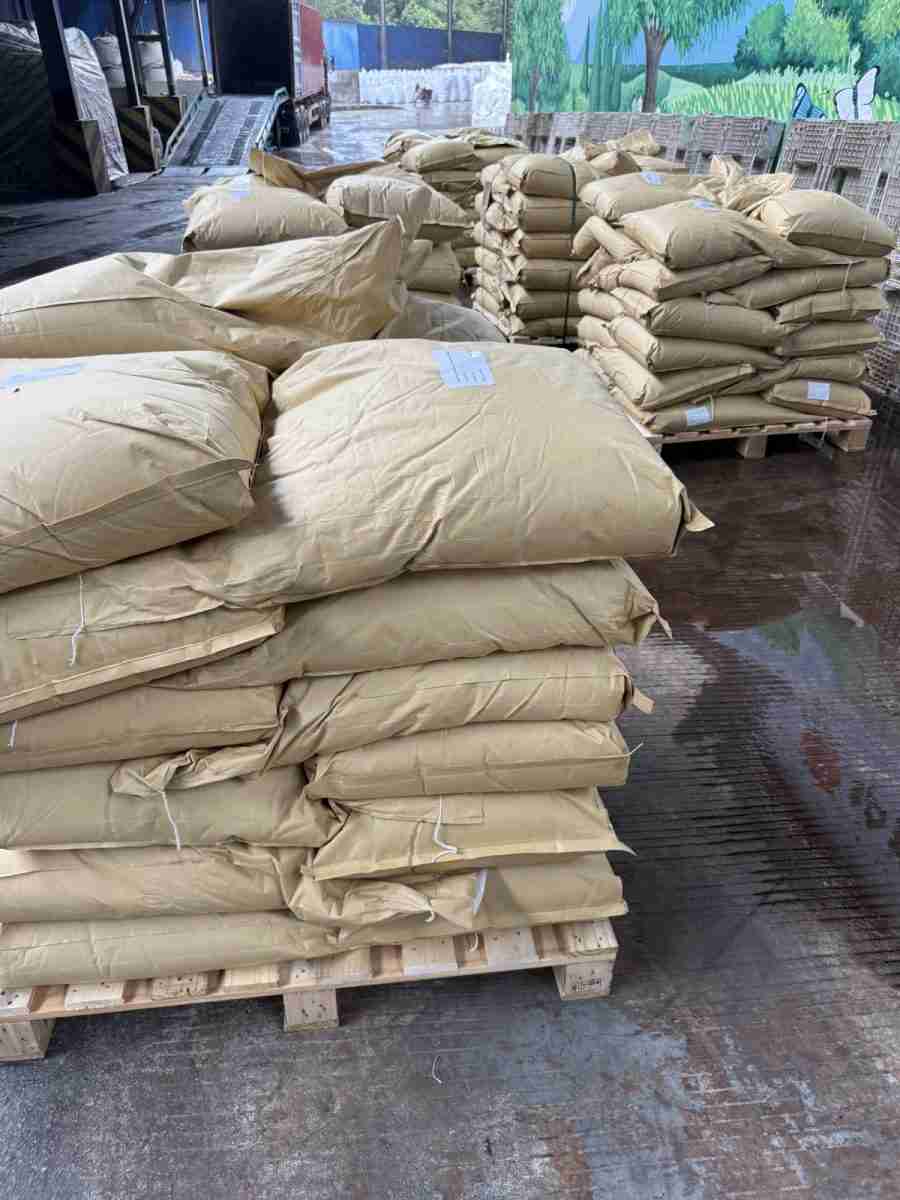
Calcium lignosulfonate is one of the most widely used low-cost binders for pelleting and agglomerating fine powders. Its TDS lists iron ore fines, lead and zinc powder, coal, coke, ceramic tiles, foundry sand and pelletised feed. This page covers how it binds, which grade to start with, how to set up a trial and where its limits are.
- Role: temporary binder that gives green and dry strength and reduces fines and dust.
- Listed uses (TDS): ore fines, lead/zinc powder, coal, coke, ceramics, foundry sand, fodder pellets.
- Form: powder dissolved in the mixing water, or a liquid grade dosed directly.
- Limit: water-soluble, so bonded pellets lose strength when soaked.

Calcium Lignosulfonate Binder for Pelleting: How It Works
When the powder dissolves in the moisture of the mix, the lignosulfonate solution wets particle surfaces. During pelleting or briquetting the particles are pressed together, and the solution forms liquid bridges between them. As water evaporates, the bridges become solid and hold the pellet together. Sulfonate and phenolic groups adsorb on mineral and carbon surfaces, and the sugars in the product add tack. The anionic charge also disperses fines in the mix, which helps them pack densely.
Applications
| Material | What the binder does | What to measure |
|---|---|---|
| Iron ore fines and concentrates | Green strength before induration; less dust in handling | Drop number, green and dry crushing strength |
| Lead and zinc powders, other metal fines | Agglomerates fines for recycling or smelting | Crushing strength, fines after tumbling |
| Coal and coke fines | Briquette and pellet strength | Drop shatter, compressive strength |
| Ceramic tiles and bodies | Green strength for handling before firing | Green modulus of rupture |
| Foundry sand | Core and mould binding | Tensile strength, collapsibility |
| Fertiliser granules | Granule hardness, less dust | Crushing strength, attrition |
| Animal feed pellets | Pellet durability, fewer fines | Pellet durability index (feed-documented grades only) |
For coal, charcoal and biomass briquettes specifically, see lignosulfonate briquette binders.
Which Grade to Start With
| Grade | Key TDS values | Why trial it for binding |
|---|---|---|
| Grade One (GAC-CaLS-1) | LS 55% min; sugar 9–10%; insolubles 1.5% max | Highest active content; the TDS lists ore, coal, coke and feed binding |
| Grade Two (GAC-CaLS-2) | LS 50% min; sugar 9–12%; pH 7–9 | Near-neutral pH for pH-sensitive mixes |
| Grade Three (GAC-CaLS-3) | LS 50% min; reducing matter 18–20%; insolubles 0.5% max | Highest sugar for extra tack; cleanest solution for spraying |
How to Run a Binder Trial
- Fix the base mix, moisture and pelleting or pressing conditions and keep them constant.
- Dissolve the binder in the mixing water so it distributes evenly; powders are 95% min dry matter.
- Test a ladder of three or four dosages on a dry-solids basis, plus a no-binder control.
- Measure green strength, dry strength and fines, and record drying temperature and time.
- Repeat the best two dosages and compare cost per tonne of good pellets, not per kg of binder.
Limitations
- Water resistance: pellets soften when soaked. Store under cover or combine with a water-resistant binder.
- High temperature: the organic binder burns out on firing or induration; it is a temporary binder only.
- Sulfur and ash: the binder adds some sulfur and inorganic ash; check limits for metallurgical or fuel uses.
- Feed: industrial grades are not feed grades. Use documented feed grades within legal limits; see calcium lignosulfonate as an animal feed binder.
Pelleting Binder: FAQ
How does calcium lignosulfonate bind particles?
It dissolves in the moisture of the mix, coats particle surfaces and forms bridges between them. As the pellet dries, these bridges harden and give green and dry strength. Its sugars add tack.
What dosage should I start with?
There is no single figure. Run a trial ladder of three or four dosages on a dry-solids basis and measure the strength property you sell on, such as drop number, crushing strength or abrasion fines.
Can it be used in feed pellets?
Only feed-documented grades should be used, within the legal limits. In the EU, Regulation (EU) 2024/749 sets 10,000 mg/kg of complete feed for five named categories and 8,000 mg/kg for other species. Feed use is covered in detail on ligninchina.com.
Do lignosulfonate-bound pellets resist water?
Not on their own, because calcium lignosulfonate is water-soluble. Where wet strength matters, it is usually combined with other binders or a protective treatment.
Grades and Documents
Related: reducing sugar in calcium lignosulfonate · calcium lignosulfonate dust suppressant











