


Calcium lignosulfonate is one of the oldest organic dust suppressants for unpaved roads, haul roads and yards. It is chloride-free and comes from wood, but it is not a universal answer. This page covers how it works, published application rates, how it compares with calcium and magnesium chloride, and how to run a site trial before you commit to a season’s volume.
- Mechanism: binds surface fines; dries to a firmer, cohesive layer.
- Best fit: dry climates and long dry spells; soils with some fines or clay.
- Typical rate (USDA Forest Service guide): 50% residual concentrate at 2.3 L/m², or diluted 1:1 at 4.5 L/m²; generally 1–2 treatments per season.
- Main limits: heavy rain reduces the effect; may corrode aluminium; high BOD if it reaches small streams.
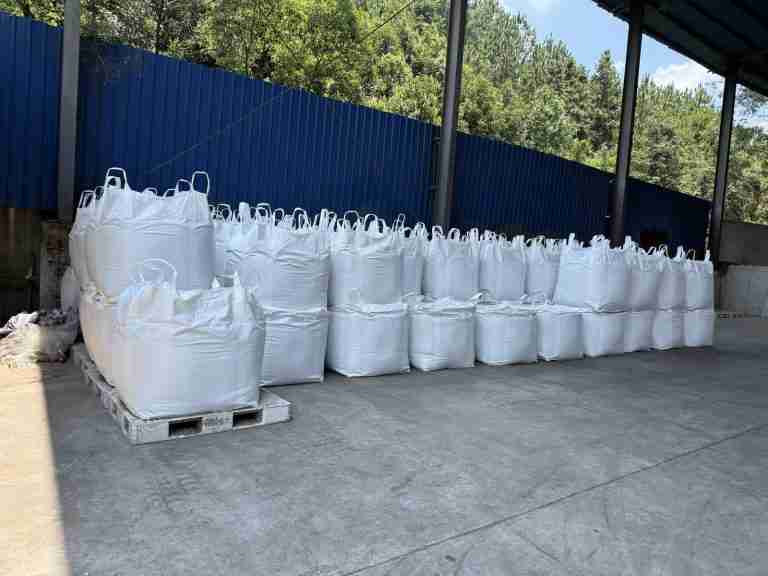
How Calcium Lignosulfonate Suppresses Dust
Road dust comes from fine particles that lose cohesion when the surface dries. Calcium lignosulfonate is a water-soluble polymer. Sprayed as a solution, it soaks into the top of the surface and coats the fines. As the water evaporates, the dried polymer bonds particles to each other and to larger aggregate. The USDA Forest Service, Dust Palliative Selection and Application Guide (Bolander and Yamada, 1999) describes lignin derivatives as binding surface particles together and greatly increasing the dry strength of the material under dry conditions. It also notes that they retain effectiveness during long dry periods with low humidity.
On surfaces with a high clay content, treated material tends to stay slightly plastic. This lets graders reshape the road and lets traffic re-compact it.
Published Application Rates
| Item | USDA Forest Service guide (1999) |
|---|---|
| Rate range | 10–25% residual at 2.3–4.5 L/m² |
| Typical, undiluted | 50% residual concentrate at 2.3 L/m² |
| Typical, diluted | 50% residual concentrate diluted 1:1 with water, at 4.5 L/m² |
| Frequency | Generally 1 to 2 treatments per season; two passes may help |
| Surface preparation | Remove loose material first, unless the surface will be mixed or compacted after spraying |
Rates are expressed as product residue (solids). A powder with 95% min dry matter can be dissolved to a 50% solution by adding roughly 0.9 kg of water per 1 kg of powder. Confirm the solids content of your solution with a density or dry-matter check before spraying.
Calcium Lignosulfonate vs Calcium Chloride and Magnesium Chloride
| Factor | Calcium lignosulfonate | Calcium chloride | Magnesium chloride |
|---|---|---|---|
| How it works | Binds particles; dries to a cohesive layer | Draws moisture from the air, keeps surface damp | Draws moisture from the air, keeps surface damp |
| Humidity need | None; works in long dry spells | Starts absorbing water at 29% RH (25 °C), 20% RH (38 °C) | Starts absorbing water at 32% RH |
| Rain | Heavy rain can remove the binding effect | Rain leaches the chloride | Rain leaches the chloride |
| Corrosion | May corrode aluminium and its alloys | Slightly corrosive to metal; highly to aluminium | Very corrosive to steel in concentrated solutions |
| Environment | High BOD if it drains into small streams | Restrict within 8 m of water and salt-sensitive plants | Restrict within 8 m of water and salt-sensitive plants |
Source: USDA Forest Service, Dust Palliative Selection and Application Guide (Bolander and Yamada, 1999), Table 1 and Environmental Impacts.
Where It Is Used
- Unpaved and rural roads: the classic application, sprayed from a water truck or distributor bar.
- Mine haul roads: same principle, but heavy trucks wear the surface faster, so expect more frequent re-treatment.
- Yards, stockpiles and storage areas: a surface spray reduces wind-blown fines from open materials.
- Near orchards, crops and water: chosen where chloride exposure is a concern, with care to keep run-off out of ditches and streams.
Limitations to Plan Around
- The binding action can be reduced or destroyed by heavy rain because the solids dissolve in water.
- The surface can be slippery when wet and brittle when dry; keep it hard by maintaining adequate moisture.
- Organic suppressants can have a high biochemical oxygen demand (BOD). Check whether treated areas drain into small streams, ponds or lakes before application.
- Comply with local rules on road treatments; they vary by region.
How to Run a Site Trial
- Classify the surface: fines content and plasticity decide how well any suppressant binds.
- Mark two or three test sections plus an untreated control on the same road.
- Apply at the published typical rate and one lower rate; record solution solids and litres per m².
- Observe dust, surface condition and potholing after traffic and after rain over several weeks.
- Compare cost per month of acceptable dust control, not cost per tonne of product.
Dust Suppressant: FAQ
How does calcium lignosulfonate control dust?
It binds fine surface particles together. When the water evaporates, the dried lignosulfonate glues the fines into a firmer surface layer that traffic and wind lift less easily.
What application rate is typical on unpaved roads?
The USDA Forest Service, Dust Palliative Selection and Application Guide (Bolander and Yamada, 1999) lists 10–25% residual at 2.3–4.5 L/m², with a typical treatment of 50% residual concentrate applied undiluted at 2.3 L/m², or diluted 1:1 with water at 4.5 L/m². Treat these as starting points for a site trial.
Does rain wash it away?
Heavy rain can reduce or remove the binding effect because the solids are water-soluble. The same guide notes the surface can be slippery when wet and brittle when dry. Plan re-treatment after wet periods.
Is it better than calcium chloride?
They work differently. Chlorides pull moisture from the air and need a minimum humidity; lignosulfonate binds particles and keeps working through long dry spells with low humidity. Chlorides are corrosive to steel and restricted near water and salt-sensitive plants; lignosulfonate is chloride-free but has a high BOD if it washes into small streams.
Grades and Documents
Related: liquid lignosulfonate for dust control · calcium lignosulfonate as a pelleting binder











