

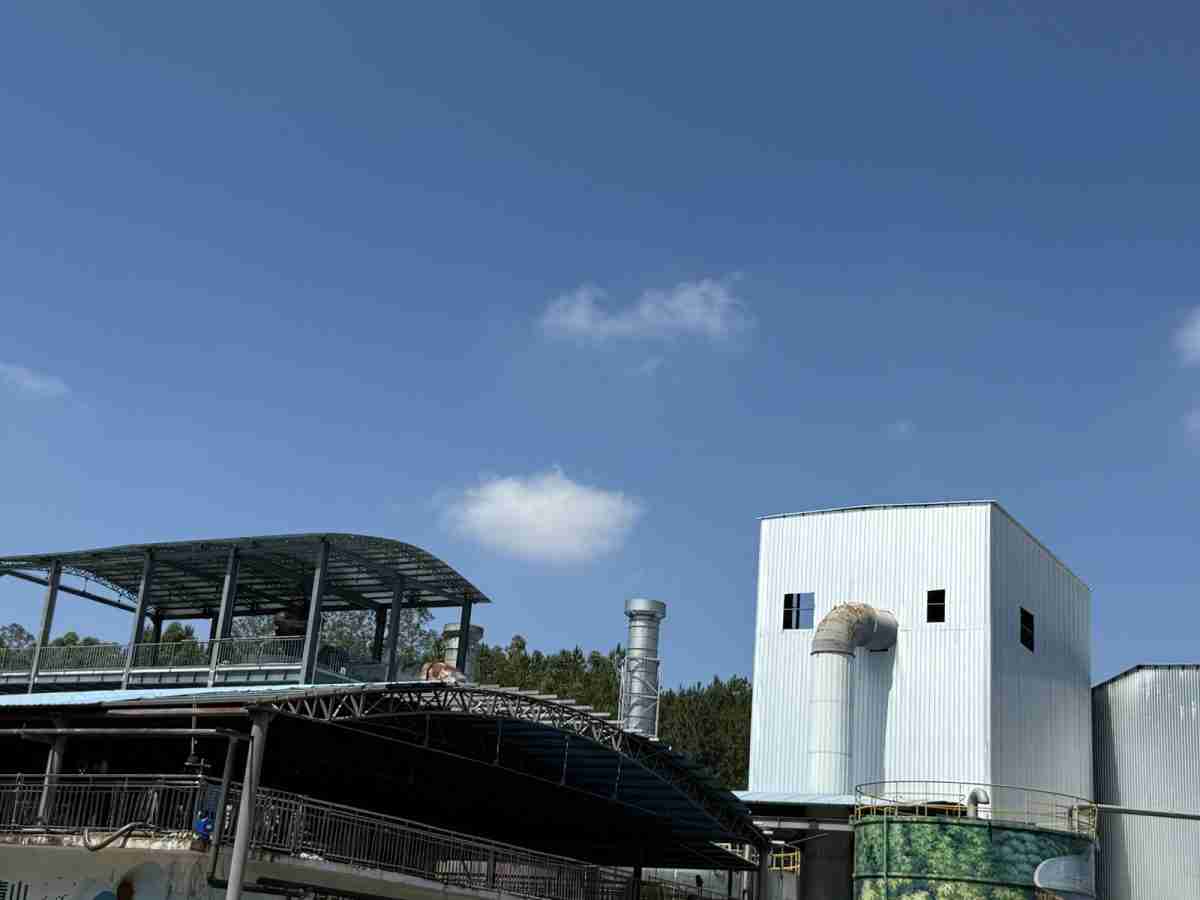
Calcium lignosulfonate is not synthesised from scratch. It is recovered from the cooking liquor of calcium-base sulfite pulping, then cleaned up, concentrated and dried. Each step after pulping changes what ends up on the specification sheet, from sugar content to insoluble matter. This page walks through the process in order and shows which specification line each step controls.
- Wood chips are cooked in a calcium bisulfite / sulfur dioxide liquor; lignin is sulfonated and dissolves.
- Pulp fibres are washed out; the spent liquor carries calcium lignosulfonate plus wood sugars and salts.
- The liquor is optionally fermented or ultrafiltered, concentrated by evaporation, then spray dried.
- The finished powder is tested against its grade specification and packed.
Manufacturing Process of Calcium Lignosulfonate, Step by Step
1. Wood preparation
Debarked logs are chipped and screened so that the cooking liquor penetrates evenly. JECFA describes food-grade calcium lignosulfonate as obtained from the sulfite pulping of softwood, and the source wood is one reason grades behave differently.
2. Calcium-base sulfite cooking
The chips are cooked under pressure in an acidic liquor of calcium bisulfite and dissolved sulfur dioxide. Bisulfite reacts with the lignin side chains and adds sulfonic acid groups. Sulfonated lignin becomes water-soluble and leaves the fibre wall, which frees the cellulose fibres for paper or dissolving pulp. Calcium from the liquor balances the sulfonate groups, which is why the product is a calcium salt.
3. Separating the spent liquor
The pulp is washed and the dissolved material is collected as spent sulfite liquor. Besides calcium lignosulfonate it contains hemicellulose sugars (mainly pentoses and hexoses), organic acids and inorganic salts such as sulfate. These by-products become the sugar, reducing matter, sulfate and ash lines on the TDS.
4. Purification (grade dependent)
Not every grade is purified the same way. Common routes are fermentation, which converts much of the sugar, and ultrafiltration, which separates the larger lignosulfonate molecules from small sugars and salts. JECFA’s definition of the food-additive grade states that it is purified by ultrafiltration and acidified. Filtration also removes fibre fines, which lowers water-insoluble matter.
5. Concentration
Multiple-effect evaporators remove water until the liquor is concentrated enough to dry economically or to sell as a liquid grade.
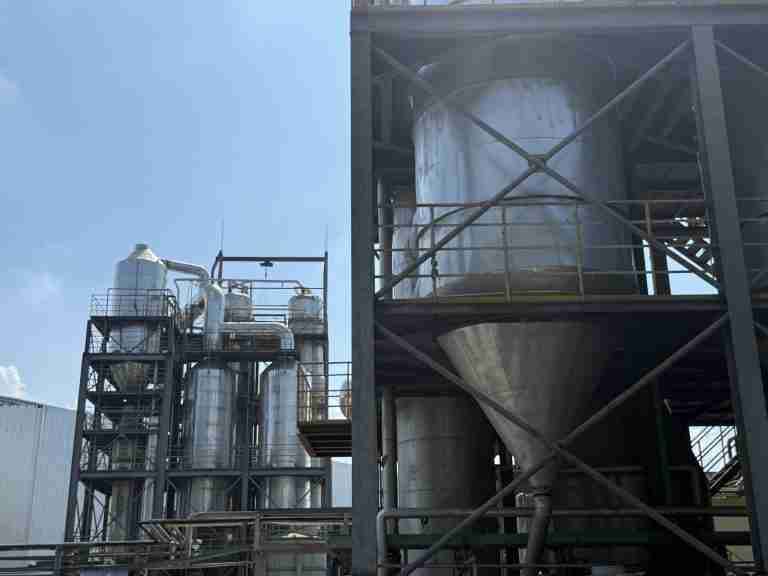
6. Spray drying
The concentrate is atomised into hot air and dries to a fine powder. Drying sets moisture and bulk density, two values buyers notice in handling. Green Agrochem Grade One, for example, lists 205 kg/m³ bulk density.
7. Testing and packing
Each lot is tested against its grade and released with a certificate of analysis. Powders are packed in 20 or 25 kg lined woven bags or 500–600 kg FIBC jumbo bags.
How Each Step Shows Up on the Specification
| Process step | Specification line it controls | Green Agrochem values (Grade One / Two / Three) |
|---|---|---|
| Cooking and sulfonation | Lignosulfonate content (dry basis) | 55% / 50% / 50% min |
| Calcium-base liquor | Total calcium and magnesium | 5–8% / 5–8% / 5–6% |
| Sugar removal (or not) | Sugar; reducing sugar or reducing matter | 9–10%, ~7% / 9–12%, ~7% / 10–12%, 18–20% reducing matter |
| Filtration | Water-insoluble matter | 1.5% / 2% / 0.5% max |
| Liquor salts | Sulphate | 2% max (all grades) |
| Spray drying | Dry matter / moisture | 95% min / 5% max (all grades) |
Values from the current Green Agrochem TDS (Rev. 2.0). Batch results are stated on the COA.
What This Means When You Choose a Grade
- Concrete and cement: sugars retard setting, so the reducing sugar or reducing matter line matters most. See reducing sugar in calcium lignosulfonate.
- Spraying and clear solutions: the filtration step decides insoluble matter; Grade Three is the lowest at 0.5% max.
- Binders: some sugar helps tack and green strength, so higher-sugar grades are often trialled for pelleting and briquetting. See calcium lignosulfonate as a pelleting binder.
- Food and feed: these need grades made and documented for that use. Industrial grades are not interchangeable with them.
Quality Checks After Production
Typical release tests are moisture or dry matter, pH, water-insoluble matter, lignosulfonate content, sugars and calcium. The methods are explained in three companion pages: lignosulfonate content test method, sulfur, calcium and ash analysis, and reducing sugar and viscosity tests.
Calcium Lignosulfonate Manufacturing: FAQ
Where does calcium lignosulfonate come from?
It is recovered from the spent liquor of calcium-base sulfite pulping of wood. The cooking liquor sulfonates the lignin, making it water-soluble, and the calcium in the liquor becomes the counter-ion.
Why do grades differ in sugar content?
Spent sulfite liquor carries wood sugars from hemicellulose. Grades that are fermented or ultrafiltered after pulping contain less sugar; grades that are only concentrated and dried keep more. Green Agrochem Grade Three, for example, lists 18–20% reducing matter, while Grades One and Two list about 7% reducing sugar.
Is the powder made by spray drying?
Yes. Concentrated liquor is spray dried to a free-flowing powder. Green Agrochem powders are specified at 95% min dry matter and 5% max moisture.
Is liquid calcium lignosulfonate the same material?
It is the same chemistry taken out of the process before drying, usually supplied at roughly half solids. Check the liquid grade TDS for its solids and density.
Grades and Documents
Related: calcium vs sodium lignosulfonate · calcium lignosulfonate properties











