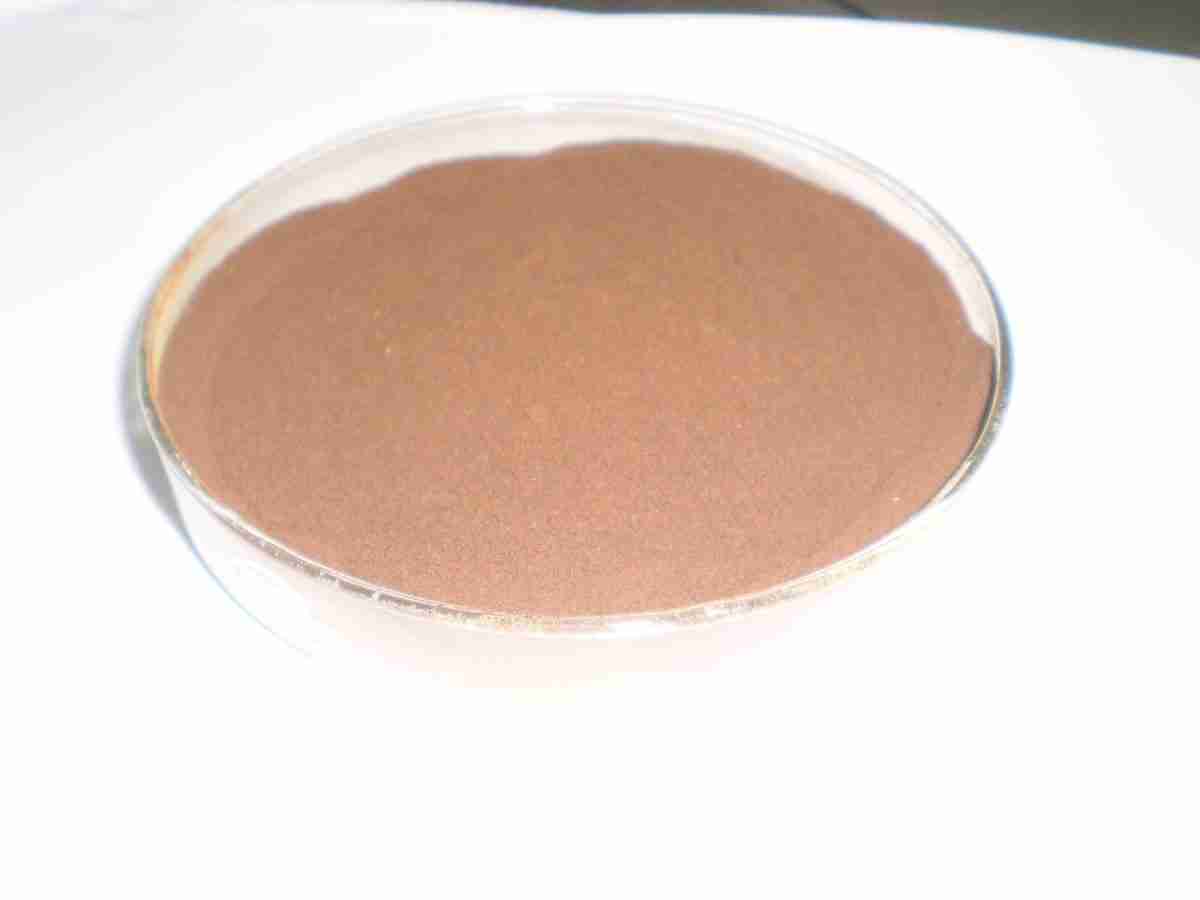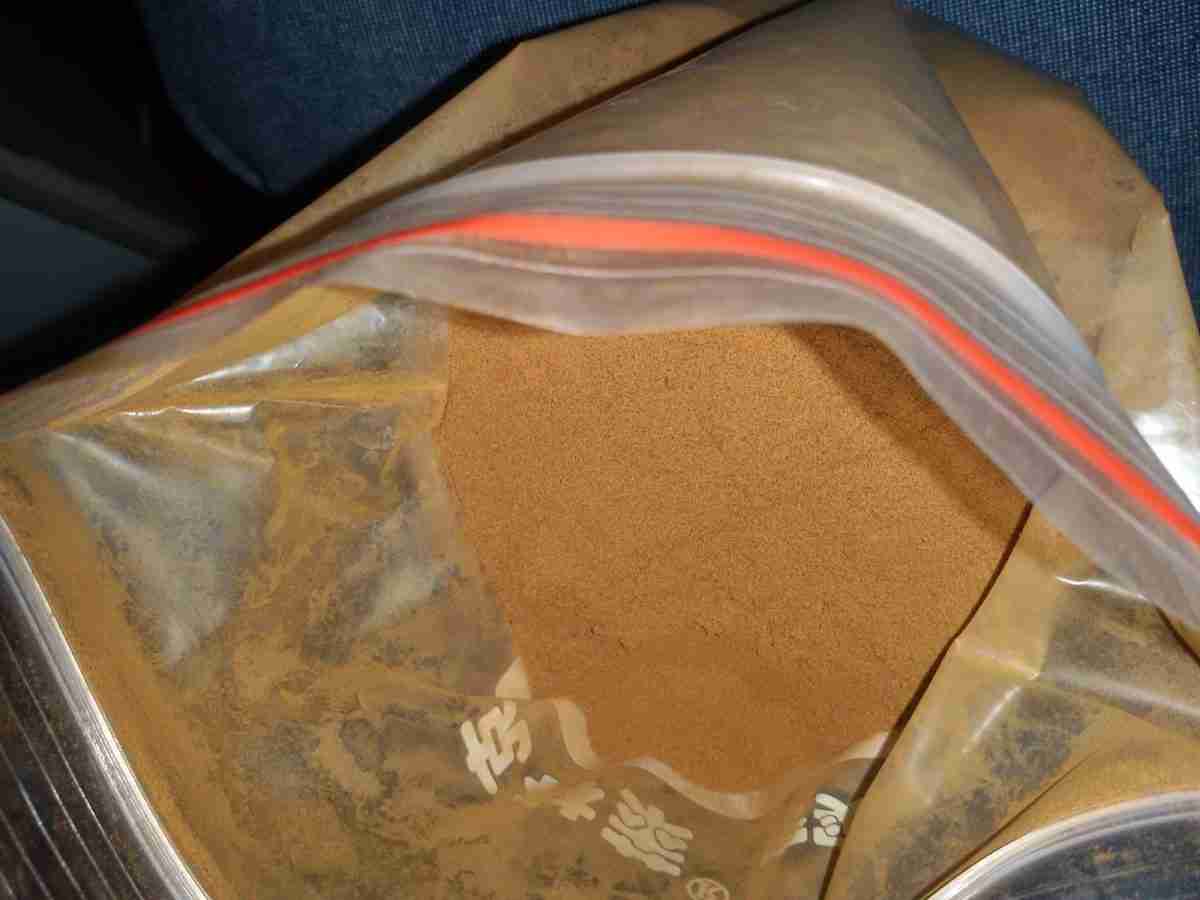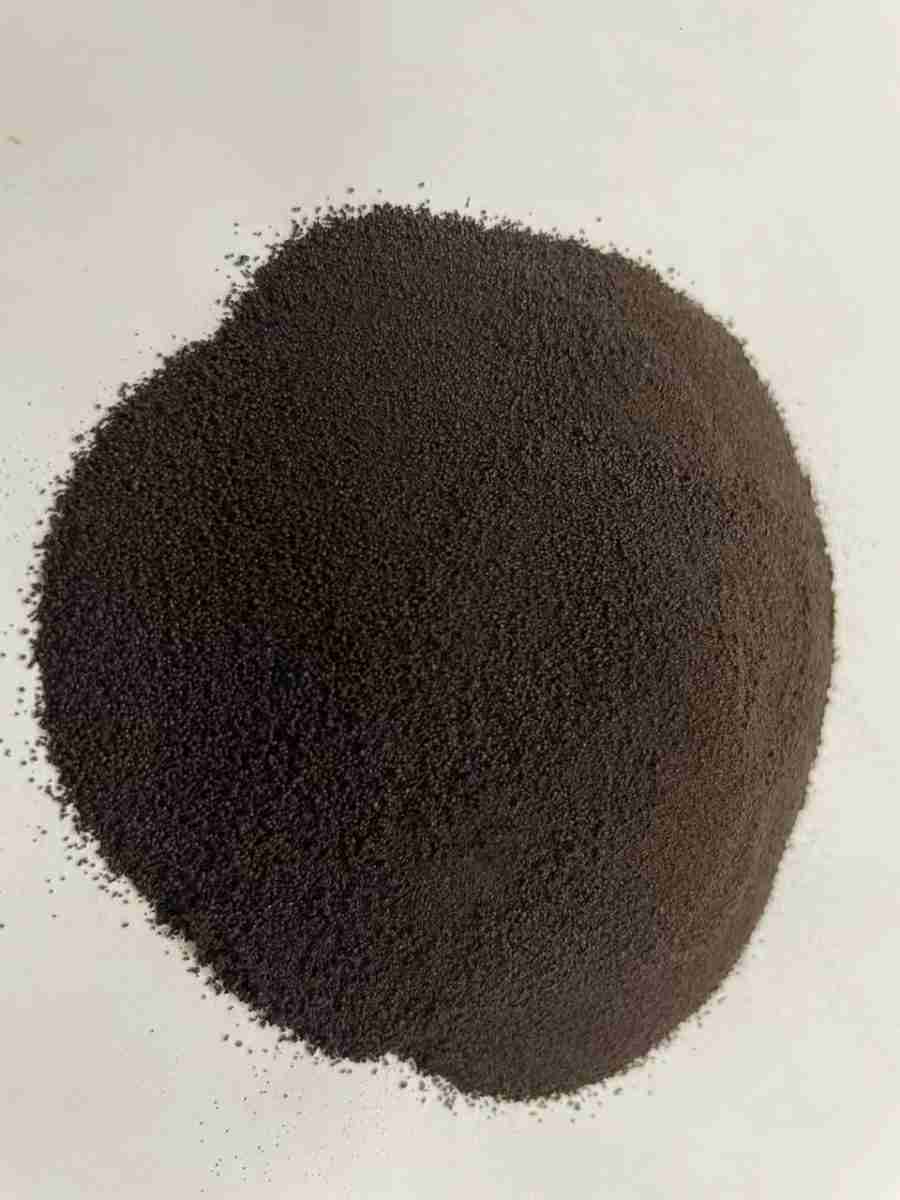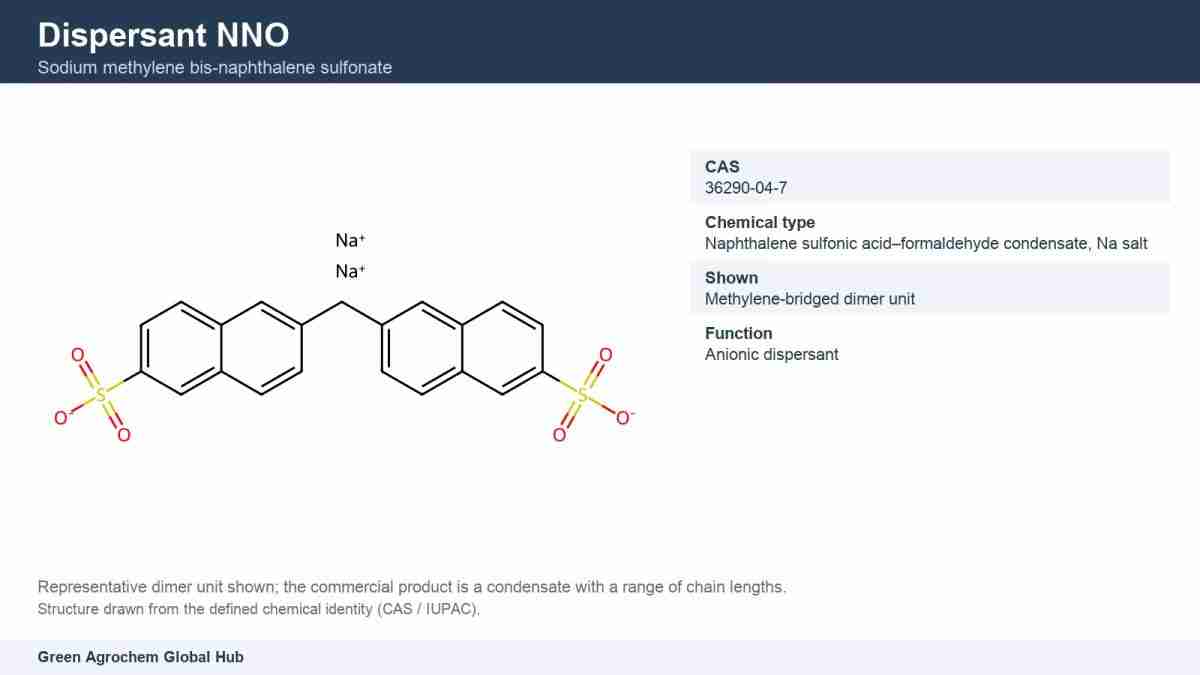

Naphthalene sulfonate formaldehyde (NSF, also SNF or PNS) is a sodium naphthalene sulfonate formaldehyde condensate. Its properties explain both why it disperses well and where it does not work. The values below are from our current technical data sheets.
Physical and Chemical Properties
| Property | Value or description |
|---|---|
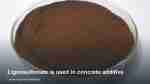
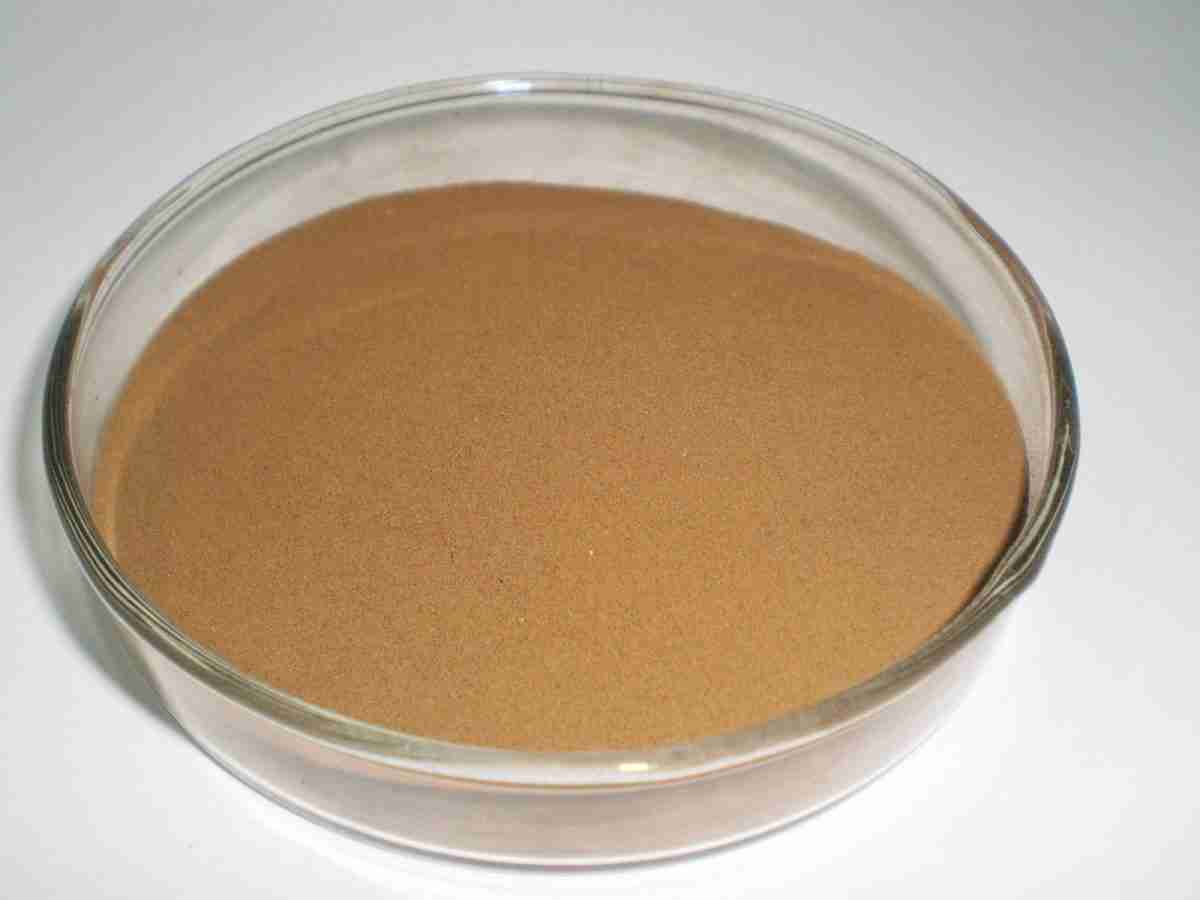
| Appearance | Brown to dark brown powder |
| Solubility | Readily soluble in water |
| pH | 7 – 9 (SNF-5 to SNF-20); 6.5 – 8.5 at 1:10 (high-solids powder grade) |
| Solids | 91% min; 95% min for the high-solids grade |
| Sodium sulfate | 5, 10, 18 or 20% max, by grade |
| Chloride | 0.4–0.5% max by grade; below 200 ppm for the high-solids grade |
| Surface tension | (71 ± 1) × 10-3 N/m |
| Charge | Anionic |
What the Properties Mean
- Anionic polymer: it adsorbs on particles and gives them a negative charge, so they repel each other. That is how it disperses cement, dyes and pigments.
- Surface tension close to water: a solution has almost the same surface tension as pure water (about 72 × 10-3 N/m), so NSF is a dispersant, not a strong wetting agent. Where fast wetting is needed, alkyl naphthalene sulfonates are used instead.
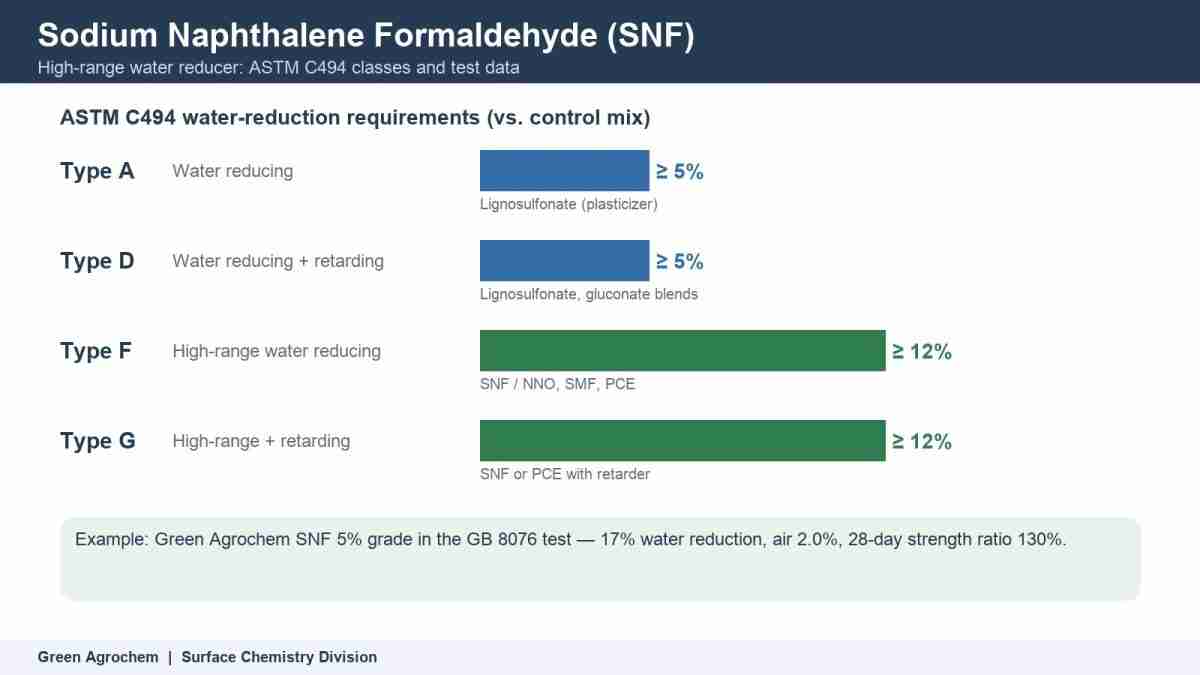
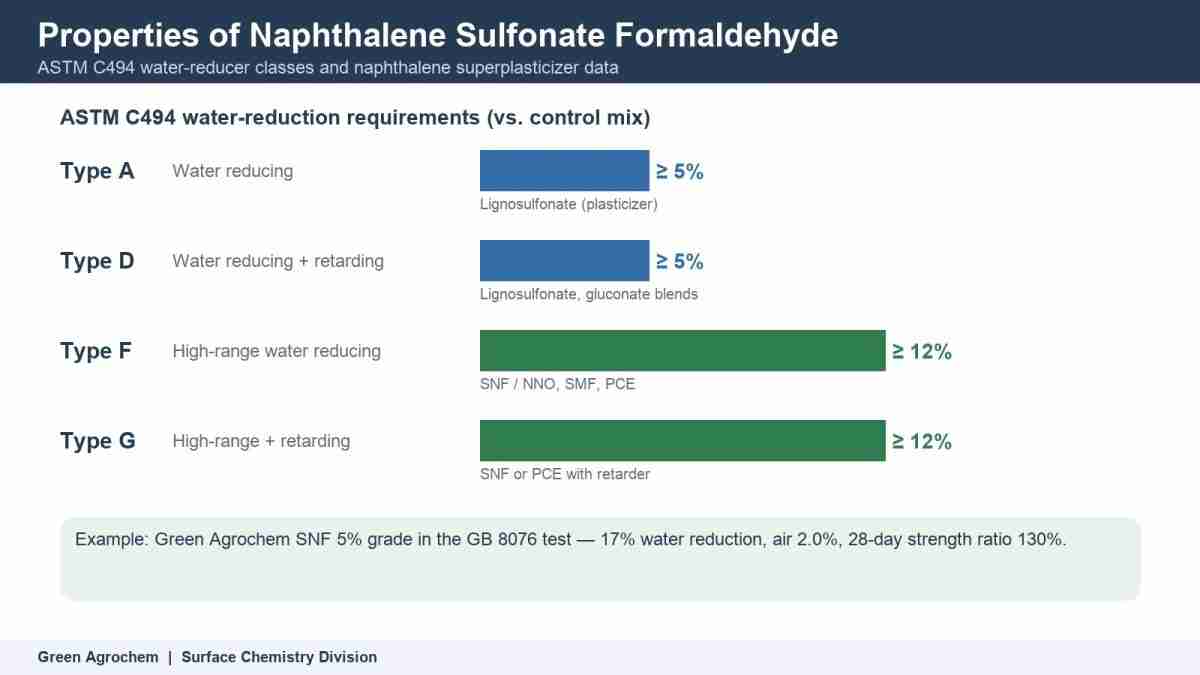
- Low foaming: it adds little air to concrete (2.0% in the SNF-5 TDS test).
- Sodium sulfate: a by-product of neutralisation. It lowers the active content and can crystallise from concentrated solutions in the cold, which is why low-sulfate grades are used for liquids.
How It Is Made
Naphthalene is sulfonated with sulfuric acid, condensed with formaldehyde and neutralised with sodium hydroxide. More detail: what sodium naphthalene formaldehyde is.
Handling
Keep bags sealed and dry; the powder takes up moisture. Shelf life is typically 12 months in the original packaging. Avoid breathing dust and contact with eyes and skin; follow the SDS.
Grades and data sheets: SNF product page. Wetting agents: sodium alkyl naphthalene sulfonate.
Frequently Asked Questions
What are the properties of naphthalene sulfonate formaldehyde?
A brown, water-soluble, anionic powder with pH 7–9, solids 91% min and surface tension close to water; grades differ in sodium sulfate (5–20% max).
Is naphthalene sulfonate formaldehyde a wetting agent?
No. Its solution has almost the same surface tension as water. It is a dispersant; alkyl naphthalene sulfonates are the wetting agents.
Why does NSF contain sodium sulfate?
Sodium sulfate forms when the excess sulfuric acid is neutralised. Grades are named by the maximum amount left.